
OPSX 工作流
欢迎在 Discord 提供反馈。
OPSX 现已成为 OpenSpec 的标准工作流。
它是一种灵活、迭代式的工作流,用于处理 OpenSpec 变更。不再受僵化阶段的限制——你可以随时执行各种操作。
为什么要有 OPSX
Section titled “为什么要有 OPSX”旧版 OpenSpec 工作流虽然可用,但限制很多:
- 指令是硬编码的——埋在 TypeScript 代码中,无法修改
- 要么全做,要么不做——一个大型命令一次创建所有内容,无法单独测试各个部分
- 结构固定——每个人都使用同一种工作流,无法定制
- 黑盒——AI 输出不理想时,无法调整提示词
**OPSX 打开了这扇门。**现在任何人都可以:
- 试验指令——编辑模板,观察 AI 的表现是否改善
- 细粒度测试——独立验证每个产物的指令
- 定制工作流——定义自己的产物及其依赖关系
- 快速迭代——修改模板后立即测试,无需重新构建
Legacy workflow: OPSX:┌────────────────────────┐ ┌────────────────────────┐│ Hardcoded in package │ │ schema.yaml │◄── You edit this│ (can't change) │ │ templates/*.md │◄── Or this│ ↓ │ │ ↓ ││ Wait for new release │ │ Instant effect ││ ↓ │ │ ↓ ││ Hope it's better │ │ Test it yourself │└────────────────────────┘ └────────────────────────┘OPSX 面向所有人:
- 团队——创建符合实际工作方式的工作流
- 高级用户——调整提示词,让 AI 更好地理解你的代码库
- OpenSpec 贡献者——无需发布新版本即可试验新方法
我们仍在共同探索什么方法最有效。OPSX 让大家能够一起学习。
线性工作流的问题: 你先“处于规划阶段”,然后“进入实现阶段”,最后“完成”。但现实工作并非如此。实现过程中,你可能发现设计有误,需要更新规范,然后继续实现。线性阶段与实际工作方式相冲突。
OPSX 的方式:
- 操作,而非阶段——创建、实现、更新、归档,任何操作都可以随时执行
- 依赖关系用于启用操作——它们说明你可以做什么,而不是规定下一步必须做什么
proposal ──→ specs ──→ design ──→ tasks ──→ implement# Make sure you have openspec installed — skills are automatically generatedopenspec init这会在 .claude/skills/(或对应目录)中创建 skills,AI 编码助手可自动检测它们。
默认情况下,OpenSpec 使用 core 工作流配置(propose、explore、apply、update、sync、archive)。如果需要扩展工作流命令(new、continue、ff、verify、bulk-archive、onboard),请使用 openspec config profile 配置,并通过 openspec update 应用。
设置期间,系统会提示你创建项目配置(openspec/config.yaml)。此配置可选,但建议创建。
项目配置可设置默认值,并向所有产物注入项目专属上下文。
配置会在运行 openspec init 时创建,也可以手动创建:
schema: spec-driven
context: |  Tech stack: TypeScript, React, Node.js  API conventions: RESTful, JSON responses  Testing: Vitest for unit tests, Playwright for e2e  Style: ESLint with Prettier, strict TypeScript
rules: proposal: - Include rollback plan - Identify affected teams specs: - Use Given/When/Then format for scenarios design: - Include sequence diagrams for complex flows| 字段 | 类型 | 说明 |
|---|---|---|
schema |
string | 新建变更时使用的默认 schema(例如 spec-driven) |
context |
string | 注入所有产物指令的项目上下文 |
rules |
object | 按产物 ID 设置的产物级规则 |
Schema 优先级(从高到低):
- CLI 标志(
--schema <name>) - 变更元数据(变更目录中的
.openspec.yaml) - 项目配置(
openspec/config.yaml) - 默认值(
spec-driven)
上下文注入:
- 上下文会添加到每个产物指令的开头
- 内容会用
<context>...</context>标签包裹 - 帮助 AI 理解项目约定
规则注入:
- 只会为匹配的产物注入规则
- 内容会用
<rules>...</rules>标签包裹 - 位于上下文之后、模板之前
各 Schema 的产物 ID
Section titled “各 Schema 的产物 ID”spec-driven(默认):
proposal— 变更提案specs— 规范design— 技术设计tasks— 实现任务
rules中未知的产物 ID 会产生警告- Schema 名称会根据可用 schema 列表进行验证
- 上下文大小上限为 50KB
- 无效 YAML 会报告行号
“Unknown artifact ID in rules: X”
- 检查产物 ID 是否与 schema 匹配(参见上方列表)
- 运行
openspec schemas --json查看每个 schema 的产物 ID
配置未生效:
- 确认文件路径为
openspec/config.yaml(而非.yml) - 使用验证工具检查 YAML 语法
- 配置更改会立即生效(无需重启)
上下文过大:
- 上下文大小限制为 50KB
- 请改为概述内容,或链接到外部文档
| 命令 | 功能 |
|---|---|
/opsx:propose |
一步创建变更并生成规划产物(默认快速路径) |
/opsx:explore |
梳理想法、调查问题、明确需求 |
/opsx:new |
创建新的变更脚手架(扩展工作流) |
/opsx:continue |
创建下一个产物(扩展工作流) |
/opsx:ff |
快速生成规划产物(扩展工作流) |
/opsx:apply |
实现任务,并按需更新产物 |
/opsx:update |
修改变更的规划产物并保持一致 |
/opsx:verify |
根据产物验证实现(扩展工作流) |
/opsx:sync |
将增量规范合并到主规范(可选) |
/opsx:archive |
完成后归档 |
/opsx:bulk-archive |
批量归档已完成的变更(扩展工作流) |
/opsx:onboard |
引导完成端到端变更流程 |
/opsx:explore梳理想法、调查问题、比较方案。不要求任何固定结构——它就是一个思考伙伴。想法逐渐清晰后,可以转到 /opsx:propose(默认工作流),或 /opsx:new//opsx:ff(扩展工作流)。
开始一项新变更
Section titled “开始一项新变更”/opsx:propose创建变更,并生成实现前所需的规划产物。
如果启用了扩展工作流,也可以改用:
/opsx:new # scaffold only/opsx:continue # create one artifact at a time/opsx:ff # create all planning artifacts at once/opsx:continue根据依赖关系显示当前可创建的产物,然后创建其中一个。重复此操作即可逐步构建变更。
/opsx:ff add-dark-mode一次性创建所有规划产物。适用于你已明确要构建什么的情况。
实现(灵活迭代的部分)
Section titled “实现(灵活迭代的部分)”/opsx:apply逐项处理任务,并在完成时勾选。如果同时处理多项变更,可以运行 /opsx:apply <name>;否则它会根据对话推断目标变更,如果无法判断则提示你选择。
/opsx:update add-dark-mode - we're storing the theme in a cookie now修改变更现有的规划产物,并确保各方向内容保持一致(例如修改设计可能会影响提案)。它不会编辑代码。每项编辑都会先与你确认。关于它如何处理缺失文件而不创建新产物,请参阅更新命令参考。
如果变更已经实现,它会建议运行 /opsx:apply,使代码与修订后的计划保持一致。如果修订改变了变更的意图,则应重新开始。参阅何时更新,何时重新开始。
同步增量规范
Section titled “同步增量规范”/opsx:sync将当前变更的增量规范合并到主 openspec/specs/ 中,但不归档——该变更仍保持活动状态。此操作会应用整个增量:## REMOVED 下的需求会从主规范中删除,重命名的需求会在原位置改名,增量未提及的内容则保持不变。同步是可选的——如果尚未同步,归档时会提示你先同步。以下情况适合使用同步:归档前先更新主规范;并行变更需要基于本次新增的规范继续工作;或你想在归档前检查合并后的主规范。
/opsx:archive # Move to archive when done (prompts to sync specs if needed)何时更新,何时重新开始
Section titled “何时更新,何时重新开始”实现之前,你随时可以编辑提案或规范。但细化到什么程度,就算是“另一项工作”?
提案涵盖哪些内容
Section titled “提案涵盖哪些内容”提案会定义三件事:
- 意图——你要解决什么问题?
- 范围——哪些内容属于范围之内或之外?
- 方案——你将如何解决?
关键是:哪些内容发生了变化,变化有多大?
适合更新现有变更的情况:
Section titled “适合更新现有变更的情况:”意图相同,只是完善执行方式
- 发现了之前未考虑到的边界情况
- 需要调整方案,但目标没有改变
- 实现过程中发现设计略有偏差
缩小范围
- 发现完整范围过大,希望先交付 MVP
- “添加暗色模式” → “添加暗色模式开关(系统偏好支持放到 v2)”
根据新发现进行修正
- 代码库结构与你原先的设想不同
- 某个依赖的行为与预期不符
- “使用 CSS 变量” → “改用 Tailwind 的
dark:前缀”
适合开始新变更的情况:
Section titled “适合开始新变更的情况:”意图发生根本变化
- 要解决的问题本身已经不同
- “添加暗色模式” → “添加可自定义颜色、字体和间距的完整主题系统”
范围大幅膨胀
- 变更增长到本质上已是另一项工作
- 更新后的内容会让原始提案面目全非
- “修复登录错误” → “重写身份验证系统”
原始工作已可完成
- 原始变更已经可以标记为“完成”
- 新工作可以独立成立,并非对原工作的细化
- 完成“添加暗色模式 MVP” → 归档 → 新建变更“增强暗色模式”
┌─────────────────────────────────────┐ │ Is this the same work? │ └──────────────┬──────────────────────┘ │ ┌──────────────────┼──────────────────┐ │ │ │ ▼ ▼ ▼ Same intent? >50% overlap? Can original Same problem? Same scope? be "done" without │ │ these changes? │ │ │ ┌────────┴────────┐ ┌──────┴──────┐ ┌───────┴───────┐ │ │ │ │ │ │ YES NO YES NO NO YES │ │ │ │ │ │ ▼ ▼ ▼ ▼ ▼ ▼ UPDATE NEW UPDATE NEW UPDATE NEW| 判断项 | 更新 | 新建变更 |
|---|---|---|
| 本质 | “同一件事的完善” | “不同的工作” |
| 范围重叠 | 重叠超过 50% | 重叠少于 50% |
| 完成条件 | 不做这些更改就无法“完成” | 原工作可以完成,新工作独立成立 |
| 过程叙述 | 更新过程连贯合理 | 补丁式修改只会让理解更混乱 |
更新保留上下文;新建变更让目标更清晰。
当思考过程的历史很有价值时,选择更新。 当重新开始比修补旧方案更清楚时,选择新建。
可以把它想象成 git 分支:
- 同一功能持续开发时,不断提交
- 真正开始新工作时,创建新分支
- 有时先合并部分功能,再为第二阶段重新开始
旧版(/openspec:proposal) |
OPSX(/opsx:*) |
|
|---|---|---|
| 结构 | 一份大型提案文档 | 彼此依赖的独立产物 |
| 工作流 | 线性阶段:规划 → 实现 → 归档 | 灵活操作——随时执行任何操作 |
| 迭代 | 返回上一步不方便 | 根据新发现更新产物 |
| 定制 | 结构固定 | Schema 驱动(可定义自己的产物) |
**关键认识:**工作并非线性的。OPSX 不再假装它是线性的。
架构深入解析
Section titled “架构深入解析”本节介绍 OPSX 的内部工作方式,以及它与旧版工作流的区别。
本节示例使用扩展命令集(new、continue 等);默认 core 用户可将同样的流程映射为 propose → apply → sync → archive。
理念:阶段与操作
Section titled “理念:阶段与操作”┌─────────────────────────────────────────────────────────────────────────────┐│ LEGACY WORKFLOW ││ (Phase-Locked, All-or-Nothing) │├─────────────────────────────────────────────────────────────────────────────┤│ ││ ┌──────────────┐ ┌──────────────┐ ┌──────────────┐ ││ │ PLANNING │ ───► │ IMPLEMENTING │ ───► │ ARCHIVING │ ││ │ PHASE │ │ PHASE │ │ PHASE │ ││ └──────────────┘ └──────────────┘ └──────────────┘ ││ │ │ │ ││ ▼ ▼ ▼ ││ /openspec:proposal /openspec:apply /openspec:archive ││ ││ • Creates ALL artifacts at once ││ • Can't go back to update specs during implementation ││ • Phase gates enforce linear progression ││ │└─────────────────────────────────────────────────────────────────────────────┘
┌─────────────────────────────────────────────────────────────────────────────┐│ OPSX WORKFLOW ││ (Fluid Actions, Iterative) │├─────────────────────────────────────────────────────────────────────────────┤│ ││ ┌────────────────────────────────────────────┐ ││ │ ACTIONS (not phases) │ ││ │ │ ││ │ new ◄──► continue ◄──► apply ◄──► archive │ ││ │ │ │ │ │ │ ││ │ └──────────┴───────────┴───────────┘ │ ││ │ any order │ ││ └────────────────────────────────────────────┘ ││ ││ • Create artifacts one at a time OR fast-forward ││ • Update specs/design/tasks during implementation ││ • Dependencies enable progress, phases don't exist ││ │└─────────────────────────────────────────────────────────────────────────────┘旧版工作流在 TypeScript 中使用硬编码模板:
┌─────────────────────────────────────────────────────────────────────────────┐│ LEGACY WORKFLOW COMPONENTS │├─────────────────────────────────────────────────────────────────────────────┤│ ││ Hardcoded Templates (TypeScript strings) ││ │ ││ ▼ ││ Tool-specific configurators/adapters ││ │ ││ ▼ ││ Generated Command Files (.claude/commands/openspec/*.md) ││ ││ • Fixed structure, no artifact awareness ││ • Change requires code modification + rebuild ││ │└─────────────────────────────────────────────────────────────────────────────┘OPSX 使用外部 schema 和依赖关系图引擎:
┌─────────────────────────────────────────────────────────────────────────────┐│ OPSX COMPONENTS │├─────────────────────────────────────────────────────────────────────────────┤│ ││ Schema Definitions (YAML) ││ ┌─────────────────────────────────────────────────────────────────────┐ ││ │ name: spec-driven │ ││ │ artifacts: │ ││ │ - id: proposal │ ││ │ generates: proposal.md │ ││ │ requires: [] ◄── Dependencies │ ││ │ - id: specs │ ││ │ generates: specs/**/*.md ◄── Glob patterns │ ││ │ requires: [proposal] ◄── Enables after proposal │ ││ └─────────────────────────────────────────────────────────────────────┘ ││ │ ││ ▼ ││ Artifact Graph Engine ││ ┌─────────────────────────────────────────────────────────────────────┐ ││ │ • Topological sort (dependency ordering) │ ││ │ • State detection (filesystem existence) │ ││ │ • Rich instruction generation (templates + context) │ ││ └─────────────────────────────────────────────────────────────────────┘ ││ │ ││ ▼ ││ Skill Files (.claude/skills/openspec-*/SKILL.md) ││ ││ • Cross-editor compatible (Claude Code, Cursor, Devin) ││ • Skills query CLI for structured data ││ • Fully customizable via schema files ││ │└─────────────────────────────────────────────────────────────────────────────┘产物构成有向无环图(DAG)。依赖关系是启用条件,而非关卡:
proposal (root node) │ ┌─────────────┴─────────────┐ │ │ ▼ ▼ specs design (requires: (requires: proposal) proposal) │ │ └─────────────┬─────────────┘ │ ▼ tasks (requires: specs, design) │ ▼ ┌──────────────┐ │ APPLY PHASE │ │ (requires: │ │ tasks) │ └──────────────┘状态转换:
BLOCKED ────────────────► READY ────────────────► DONE │ │ │ Missing All deps File exists dependencies are DONE on filesystem旧版工作流——代理收到静态指令:
User: "/openspec:proposal" │ ▼ ┌─────────────────────────────────────────┐ │ Static instructions: │ │ • Create proposal.md │ │ • Create tasks.md │ │ • Create design.md │ │ • Create delta spec files │ │ │ │ No awareness of what exists or │ │ dependencies between artifacts │ └─────────────────────────────────────────┘ │ ▼ Agent creates ALL artifacts in one goOPSX——代理查询丰富的上下文:
User: "/opsx:continue" │ ▼ ┌──────────────────────────────────────────────────────────────────────────┐ │ Step 1: Query current state │ │ ┌────────────────────────────────────────────────────────────────────┐ │ │ │ $ openspec status --change "add-auth" --json │ │ │ │ │ │ │ │ { │ │ │ │ "artifacts": [ │ │ │ │ {"id": "proposal", "status": "done"}, │ │ │ │ {"id": "specs", "status": "ready"}, ◄── First ready │ │ │ │ {"id": "design", "status": "ready"}, │ │ │ │ {"id": "tasks", "status": "blocked", │ │ │ │ "missingDeps": ["specs", "design"]} │ │ │ │ ] │ │ │ │ } │ │ │ └────────────────────────────────────────────────────────────────────┘ │ │ │ │ Step 2: Get rich instructions for ready artifact │ │ ┌────────────────────────────────────────────────────────────────────┐ │ │ │ $ openspec instructions specs --change "add-auth" --json │ │ │ │ │ │ │ │ { │ │ │ │ "template": "# Specification\n\n## ADDED Requirements...", │ │ │ │ "dependencies": [{"id": "proposal", "path": "...", "done": true}│ │ │ │ "unlocks": ["tasks"] │ │ │ │ } │ │ │ └────────────────────────────────────────────────────────────────────┘ │ │ │ │ Step 3: Read dependencies → Create ONE artifact → Show what's unlocked │ └──────────────────────────────────────────────────────────────────────────┘旧版工作流——迭代过程很别扭:
┌─────────┐ ┌─────────┐ ┌─────────┐ │/proposal│ ──► │ /apply │ ──► │/archive │ └─────────┘ └─────────┘ └─────────┘ │ │ │ ├── "Wait, the design is wrong" │ │ │ ├── Options: │ │ • Edit files manually (breaks context) │ │ • Abandon and start over │ │ • Push through and fix later │ │ │ └── No official "go back" mechanism │ └── Creates ALL artifacts at onceOPSX——自然地进行迭代:
/opsx:new ───► /opsx:continue ───► /opsx:apply ───► /opsx:archive │ │ │ │ │ ├── "The design is wrong" │ │ │ │ │ ▼ │ │ Just edit design.md │ │ and continue! │ │ │ │ │ ▼ │ │ /opsx:apply picks up │ │ where you left off │ │ │ └── Creates ONE artifact, shows what's unlocked │ └── Scaffolds change, waits for direction自定义 Schema
Section titled “自定义 Schema”使用 schema 管理命令创建自定义工作流:
# Create a new schema from scratch (interactive)openspec schema init my-workflow
# Or fork an existing schema as a starting pointopenspec schema fork spec-driven my-workflow
# Validate your schema structureopenspec schema validate my-workflow
# See where a schema resolves from (useful for debugging)openspec schema which my-workflow
Schema 存储在 openspec/schemas/(项目本地、纳入版本控制)或 ~/.local/share/openspec/schemas/(用户全局)中。
Schema 结构:
openspec/schemas/research-first/├── schema.yaml└── templates/ ├── research.md ├── proposal.md └── tasks.mdschema.yaml 示例:
name: research-firstartifacts:  - id: research        # Added before proposal    generates: research.md    requires: []
  - id: proposal    generates: proposal.md    requires: [research]  # Now depends on research
  - id: tasks    generates: tasks.md    requires: [proposal]
依赖图:
research ──► proposal ──► tasks| 方面 | 旧版 | OPSX |
|---|---|---|
| 模板 | 硬编码的 TypeScript | 外部 YAML + Markdown |
| 依赖关系 | 无(一次性生成) | 通过拓扑排序处理 DAG |
| 状态 | 基于阶段的思维模型 | 根据文件系统中的文件是否存在判断 |
| 定制 | 修改源码并重新构建 | 创建 schema.yaml |
| 迭代 | 受阶段限制 | 灵活编辑任何内容 |
| 编辑器支持 | 特定工具的配置器/适配器 | 统一的 skills 目录 |
Schema 列表
Section titled “Schema 列表”Schema 定义现有哪些产物及其依赖关系。目前可用的 schema:
- spec-driven(默认):proposal → specs → design → tasks
# List available schemasopenspec schemas
# See all schemas with their resolution sourcesopenspec schema which --all
# Create a new schema interactivelyopenspec schema init my-workflow
# Fork an existing schema for customizationopenspec schema fork spec-driven my-workflow
# Validate schema structure before useopenspec schema validate my-workflow- 在决定创建变更前,先用
/opsx:explore梳理想法 - 明确目标时使用
/opsx:ff;仍在探索时使用/opsx:continue - 执行
/opsx:apply时发现问题,就修正产物后继续 - 通过
tasks.md中的复选框跟踪任务进度 - 随时运行
openspec status --change "name"查看状态
目前还不够完善,这是有意为之——我们还在探索什么方法最有效。
HagiCode
HagiCode 是一套智能体编码工作台:结构化工作流、多 Agent 并行执行与 Hero Dungeon 视图,把想法变成真正交付的软件。
让想法更快变成好用的软件,让智能编码更聪明、更高效,也更有趣。
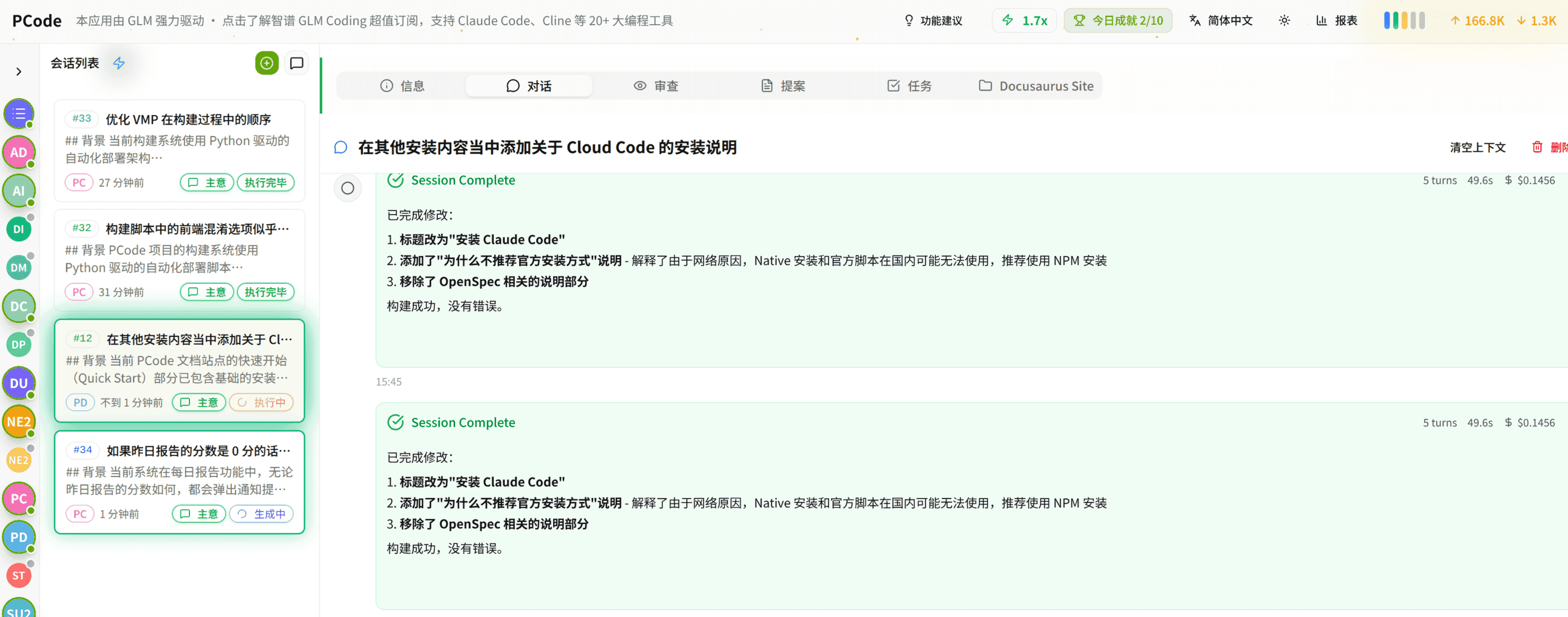
- Smart结构化工作流将意图转化为从想法到交付的可执行路径。
- Efficient多 Agent 工作流让调研、实现与审阅并行推进。
- FunHero Dungeon 让长时间编码协作更直观、更有参与感。
生态站点
快速链接
社区
© 2026 HagiCode